

On October 8, I delivered a keynote at the Social Design Days in Tbilisi exploring the dynamic tension between urban planning, material architecture, and subcultural appropriation. Titled “City, Sound, and Rebellion,” the presentation centered on a core thesis: sound is neither mere decoration nor entertainment—it is a spatial and deeply political vector.
Cities are not merely planned from the top down by architects, municipal planners, or capital flows. They are occupied, reinterpreted, and acoustically claimed from below. Where economic logic retreats—in industrial wastelands, underground bunkers, or unfinished raw concrete—subcultures find resonating bodies and protective shields to build counter-publics.
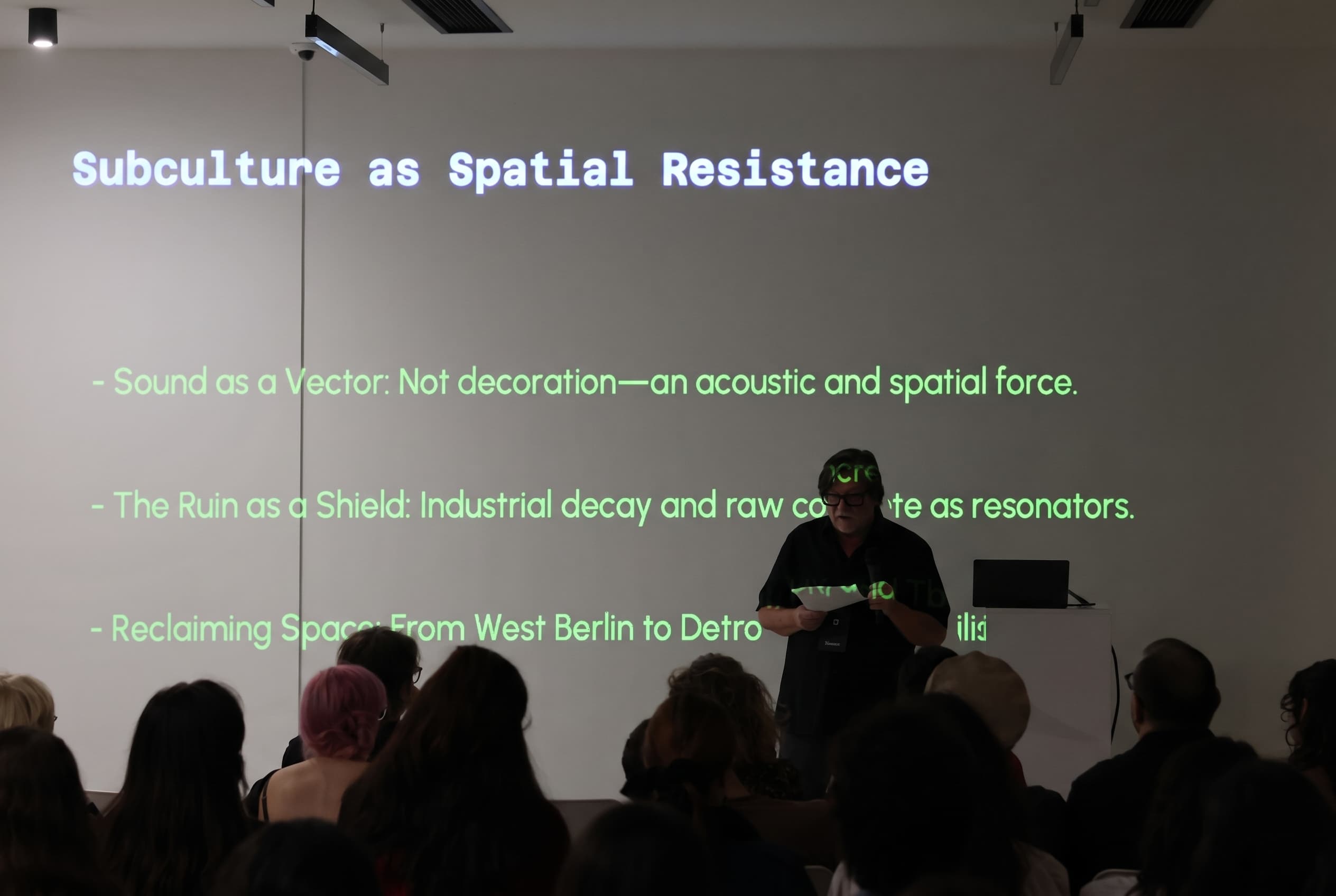
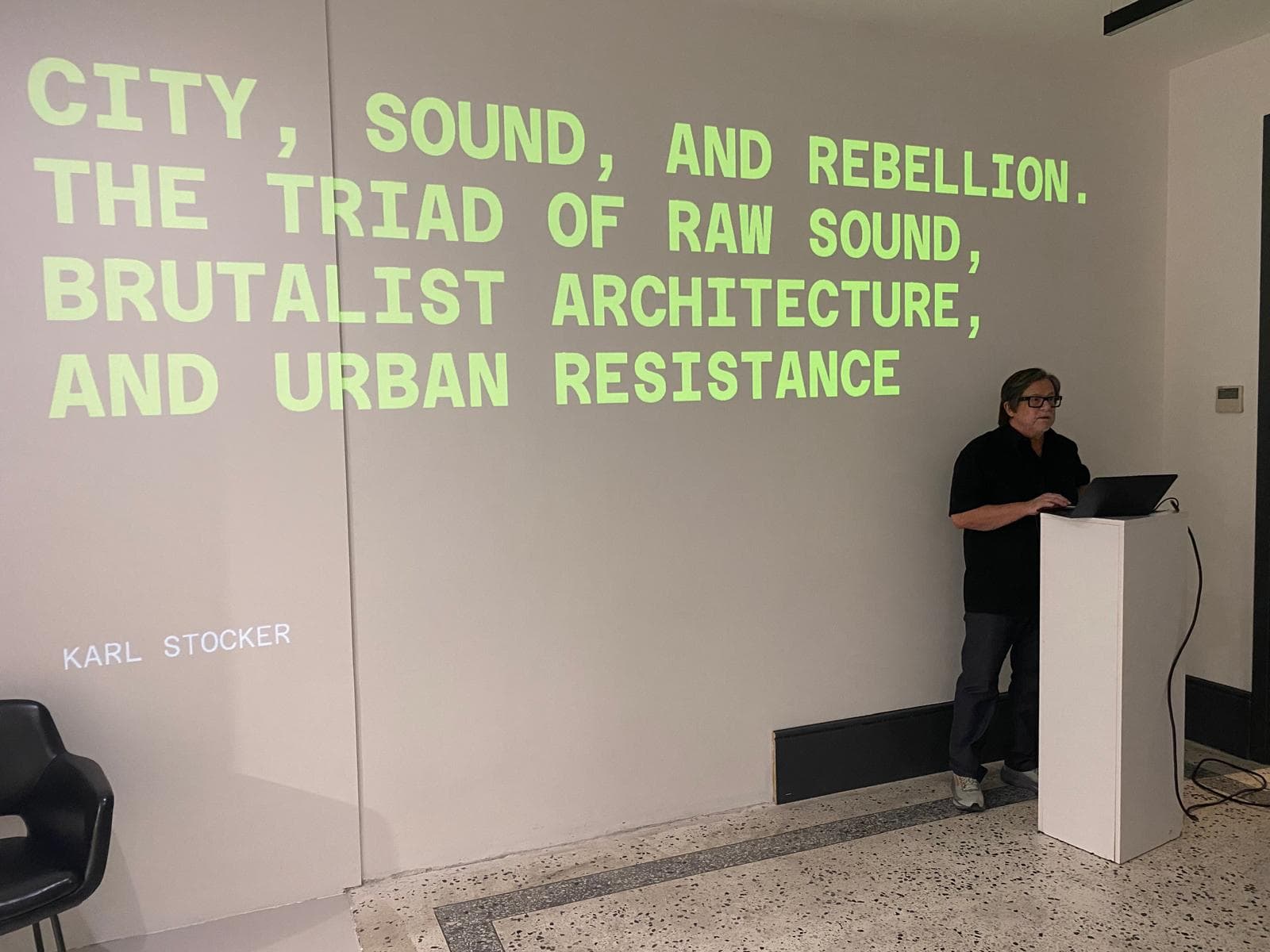
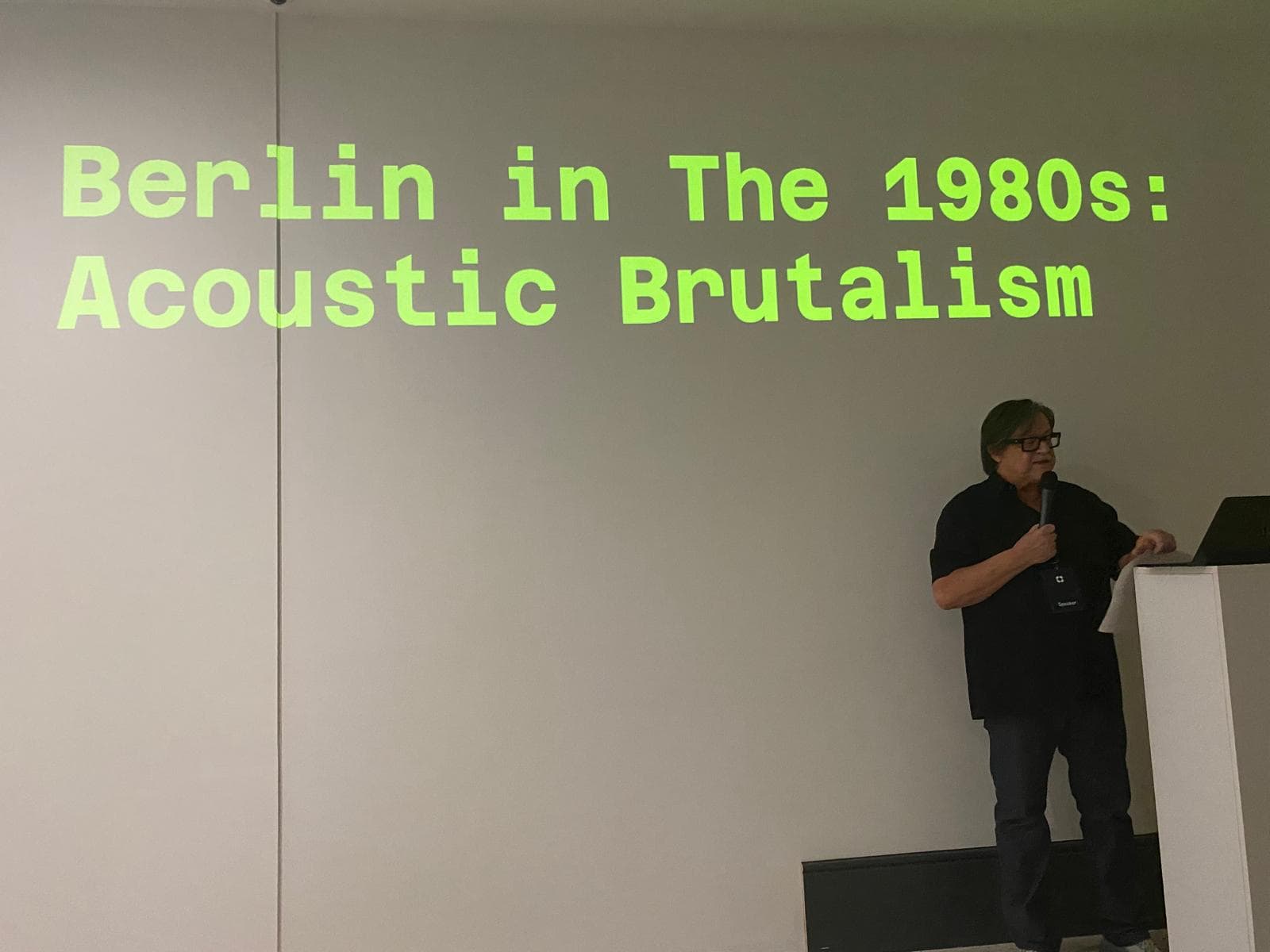


Subculture requires unfinished space. Drawing on Michel Foucault’s concept of heterotopias, counter-spaces emerge outside established norms, where the social rules of the dominant order are temporarily suspended. When capital withdraws, it creates an aesthetic and spatial vacuum rather than an urban void. The raw aesthetics of exposed concrete and rusted steel stand in direct opposition to the polished consumer architecture of modern urban development.
The historical evolution of sonic rebellion illustrates how sound and built environments continuously shape one another:
- Destructive (West Berlin, 1980s): Einstürzende Neubauten used jackhammers, steel, and fences to confront post-war architecture and dismantle the acoustic façade of bourgeois city life.
- Spatial & Futuristic (Detroit): Detroit Techno pioneers repurposed abandoned auto plants, using cavernous factory halls to let deep sub-bass frequencies resonate.
- Proletarian (Post-Industrial Britain): Test Dept treated music as physical labor, repurposing scrap metal and railway tracks in decommissioned spaces as acoustic counter-protest.
- Psychological (Birmingham): Godflesh translated the oppressive weight of highway interchanges and raw concrete into downtuned guitars and mechanical rhythms, mirroring urban alienation.
- Subversive (Yugoslavia / Slovenia): In Trbovlje, Laibach deployed subversive over-identification, hyper-magnifying socialist realism and brutalist aesthetics to dismantle authoritarian power from within.
Tbilisi: Transforming Soviet Concrete into a Civic Shield
In contemporary Tbilisi, this dialogue between architecture and subculture is directly reflected in the post-Soviet urban landscape. Rather than abandoning monumental Soviet structures, progressive youth culture actively occupies them:
· Bassiani operates within the subterranean concrete vault of a former swimming pool beneath the Dinamo Stadium.
· Khidi is built directly inside the massive reinforced concrete pillars supporting a highway bridge across the Kura River.
Here, heavy reinforced concrete functions as both a physical and acoustic barrier, shielding safe spaces established by queer, feminist, and progressive communities. The political nature of these spaces became fully visible in May 2018. Following armed police raids on Bassiani and Café Gallery, tens of thousands of citizens occupied the square in front of the Georgian Parliament with soundsystems. Under the banner “We dance together, we fight together,” the rave shifted from subterranean vaults directly into the government district as an act of civil rights resistance.
Implications for Urban Theory and Design
This trajectory from post-war ruins to contemporary resistance yields three crucial takeaways for urban planners, architects, and researchers:
1. The Right to the City: A city that sanitizes and commercializes every square meter suffocates its own cultural and social vitality. Urban centers depend on unregulated niches of disorder to prevent social stagnation.
2. Materiality Matters: Heavy concrete and industrial mass are not architectural eyesores; they serve as indispensable physical and acoustic reflectors for subcultural life.
3. Underground as Heritage: Underground culture cannot be dismissed as a noise complaint. It remains a primary catalyst for architectural reinterpretation, urban innovation, and social emancipation.
Photos:
1,2,7 Design Institute Tbilisi
3-6 Brigitte Schlick
Thanks to: