
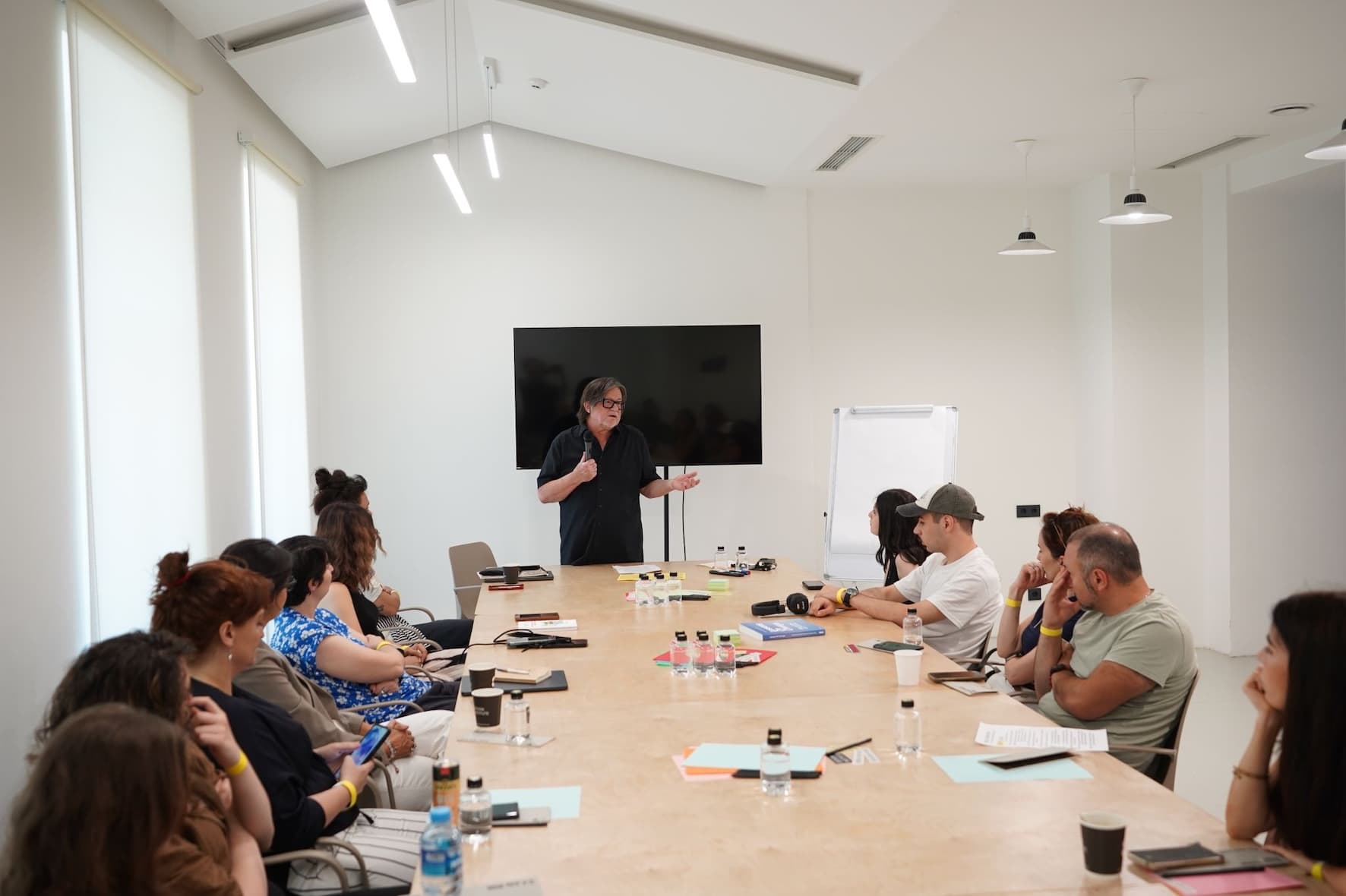
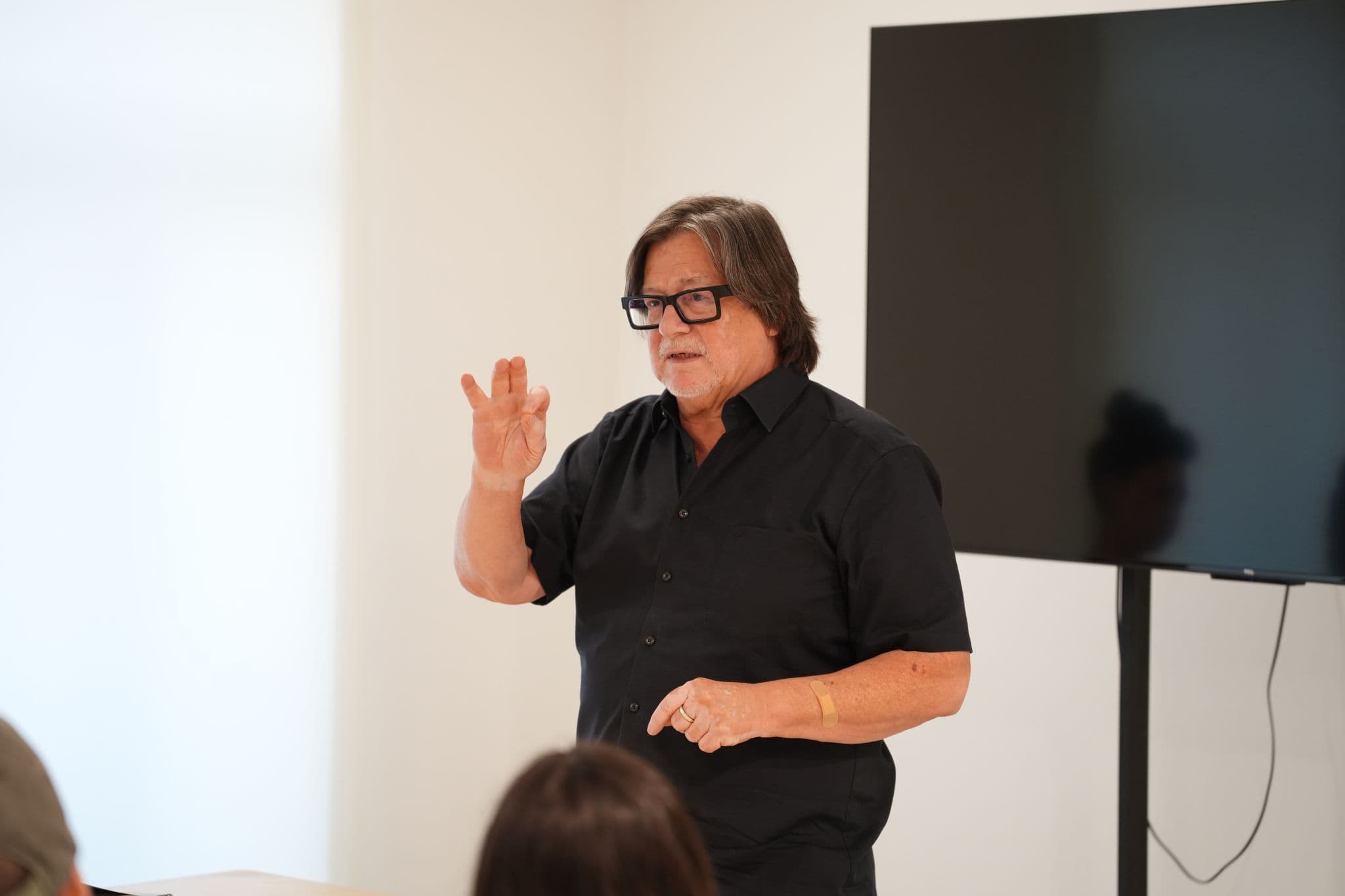
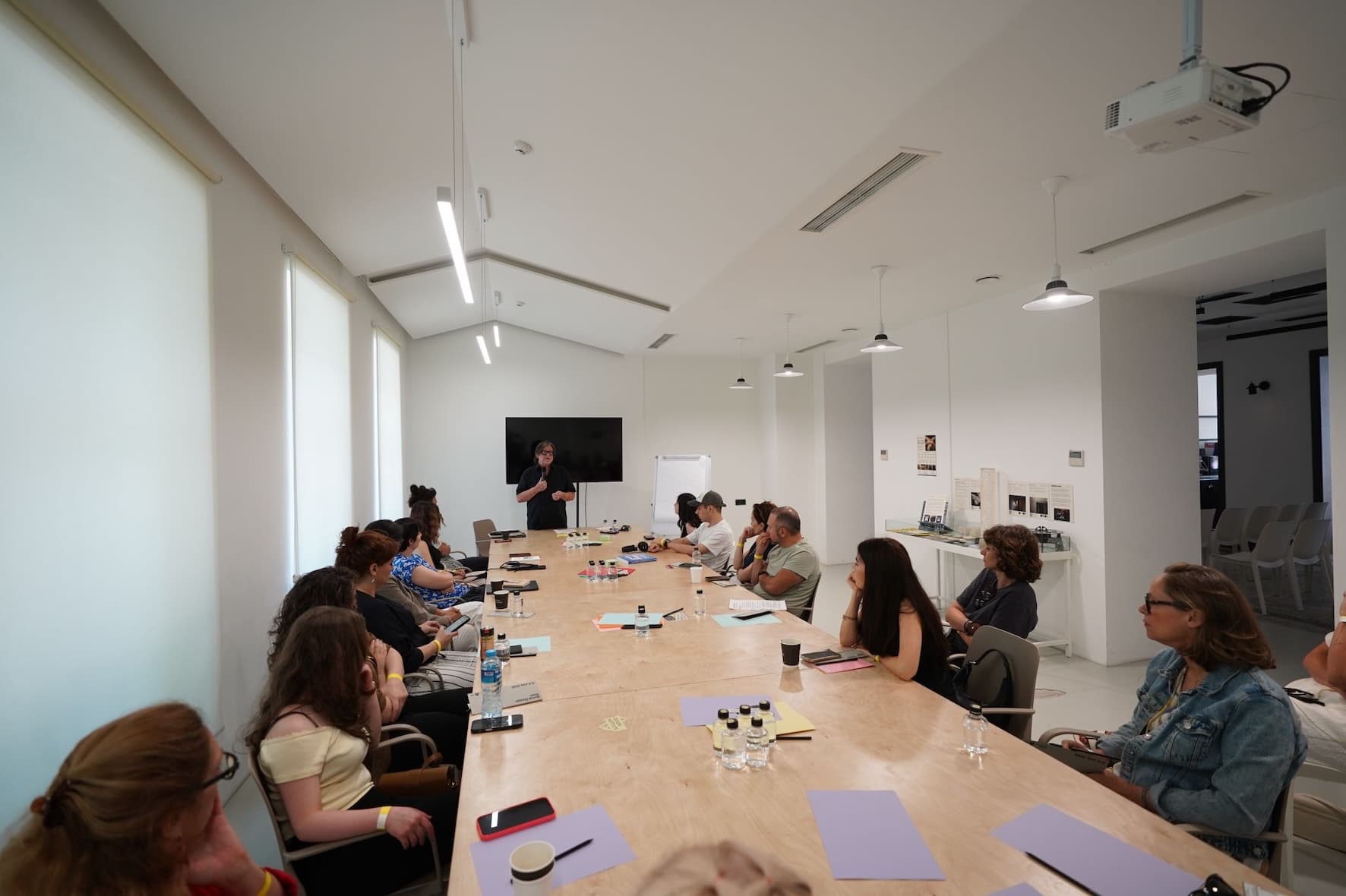
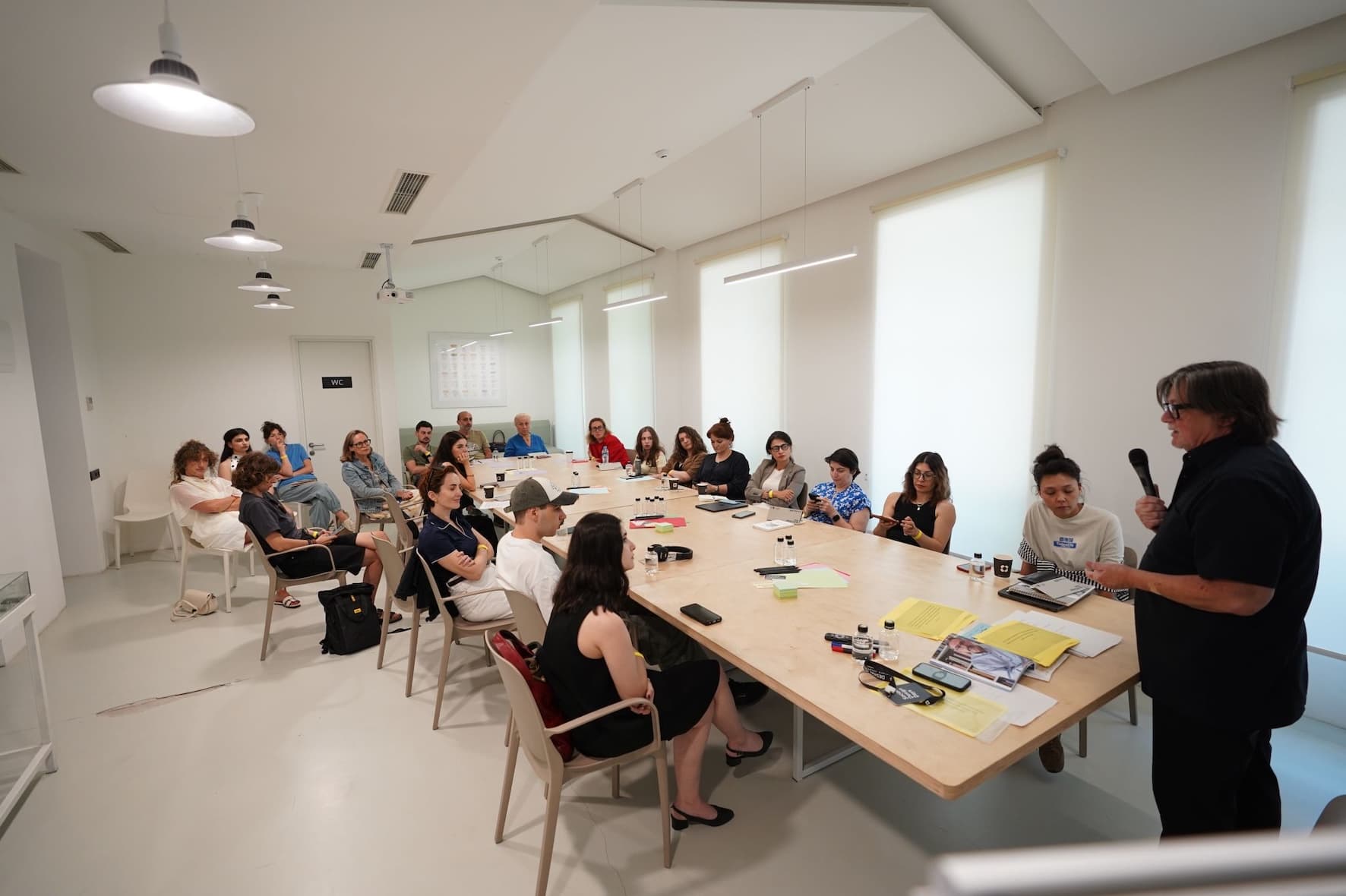
Invited by the Design Institute in Tbilisi to host the interactive co-creation workshop 'Lessons on Change', focusing on 'Empowering Individual Agency & Societal Transformation in a World in Flux', at the Social Design Days on July 2, 2026.
We live in an era characterized by profound socio-ecological crises, political polarization, and systemic instability. As our globalized world is increasingly shaken to its core, individuals are frequently left with a sense of paralysis and powerlessness, asking: How can a single person contribute to "improving" or "repairing" the status quo?
Based on the core hypotheses of our book "Lessons on Change", this workshop was designed to bridge the gap between academic/theoretical design discourse and tangible, transformative practice. Following an introductory keynote, the participants split into two working groups to co-create speculative and actionable concepts addressing the responsibility of the individual in shaping better, more resilient futures.

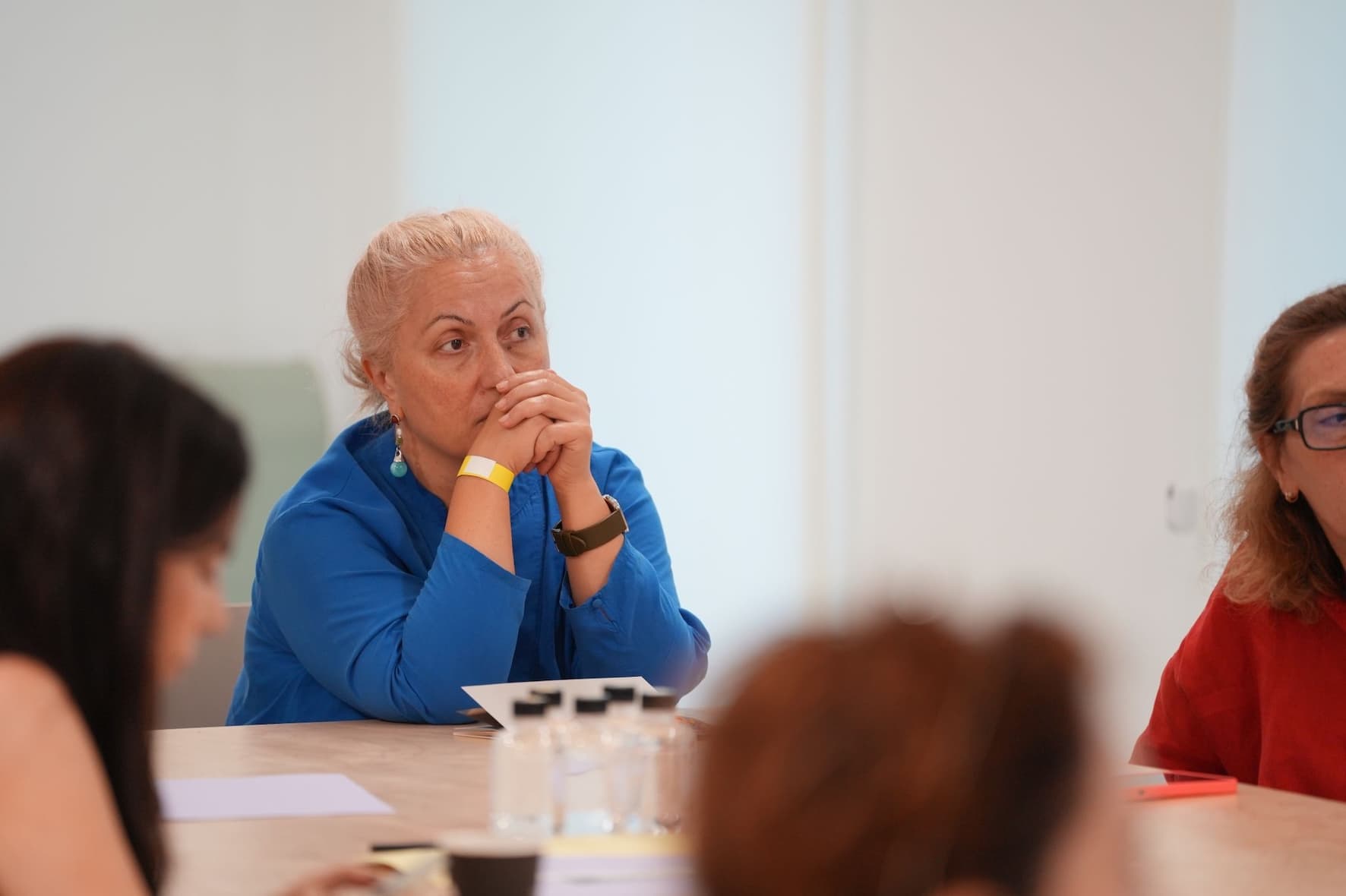
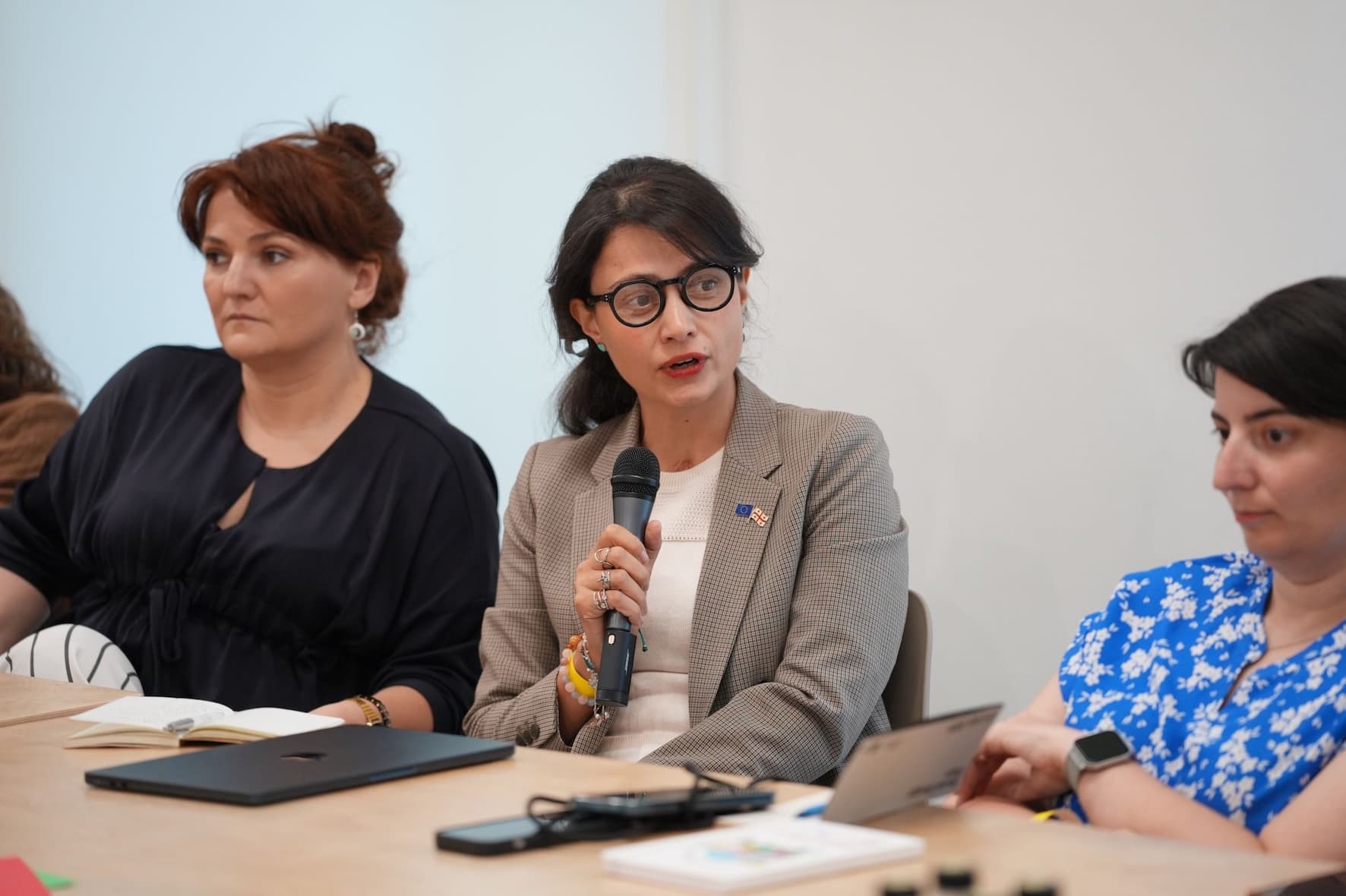

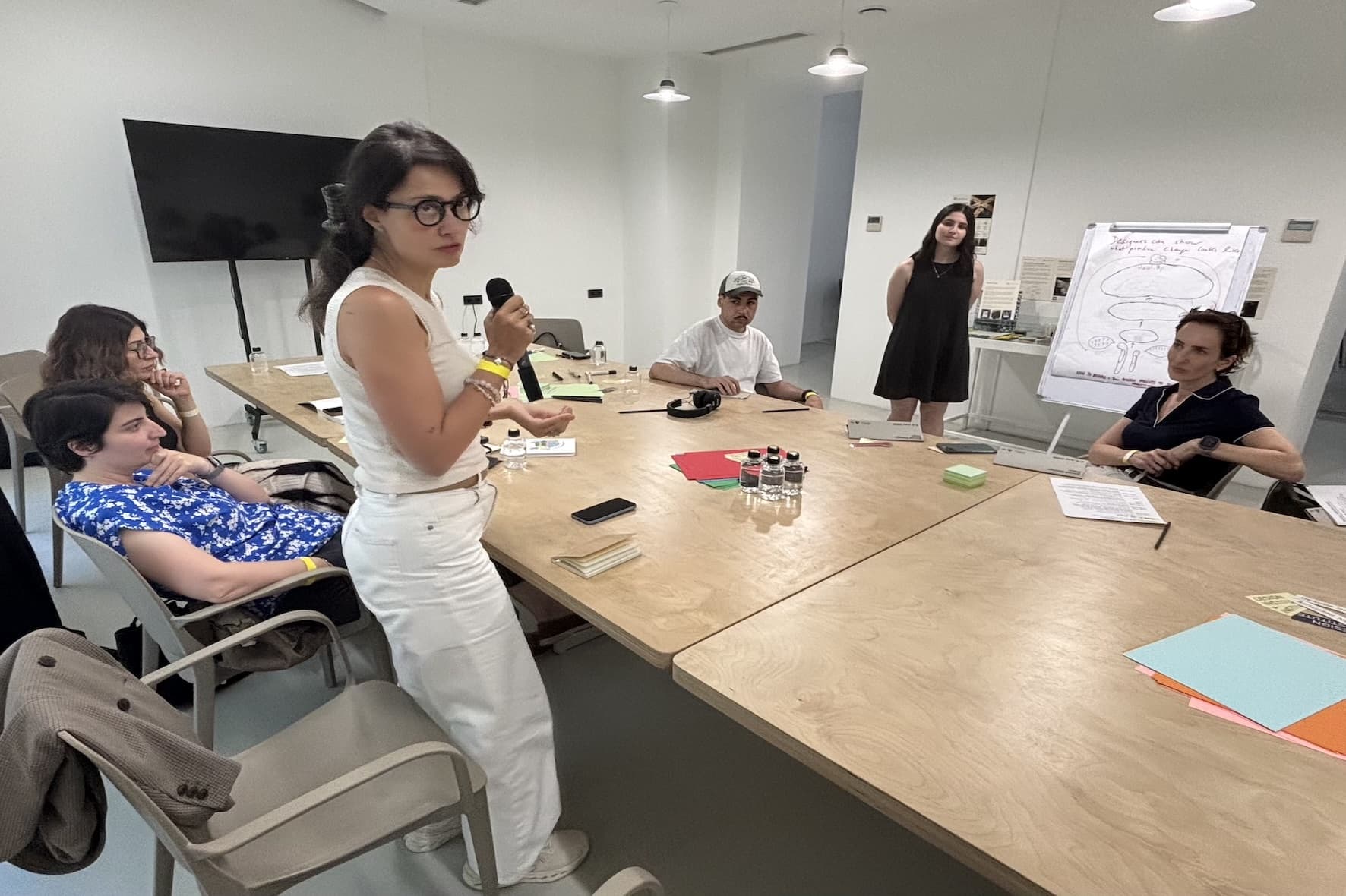
This group interrogated the socio-political agency of creators and active individuals within unstable systemic frameworks. Starting from the premise that „Designers can show what positive change looks like,“ the team developed a dynamic, hierarchical step-model that maps the transition from personal awareness to collective vision.
- The Starting Point: Transformation begins internally—by defining individual values, ethics, and personal responsibility.
- The Transition: Stepping out of passive observation into active, visible, and courageous engagement.
- The Vision of a Desirable Future: Designers and active citizens leverage their capability to make abstract, hopeful futures tangible and aesthetically graspable.
The Core Research Question "HOW TO BRIDGE – FROM TODAY'S PROJECTS TO THIS POSITIVE FUTURE?" serves as the conceptual anchor of the model. It demands that we consciously design every pragmatic, present-day project as a deliberate building block (a "bridge") toward a larger, socio-centrically improved future.
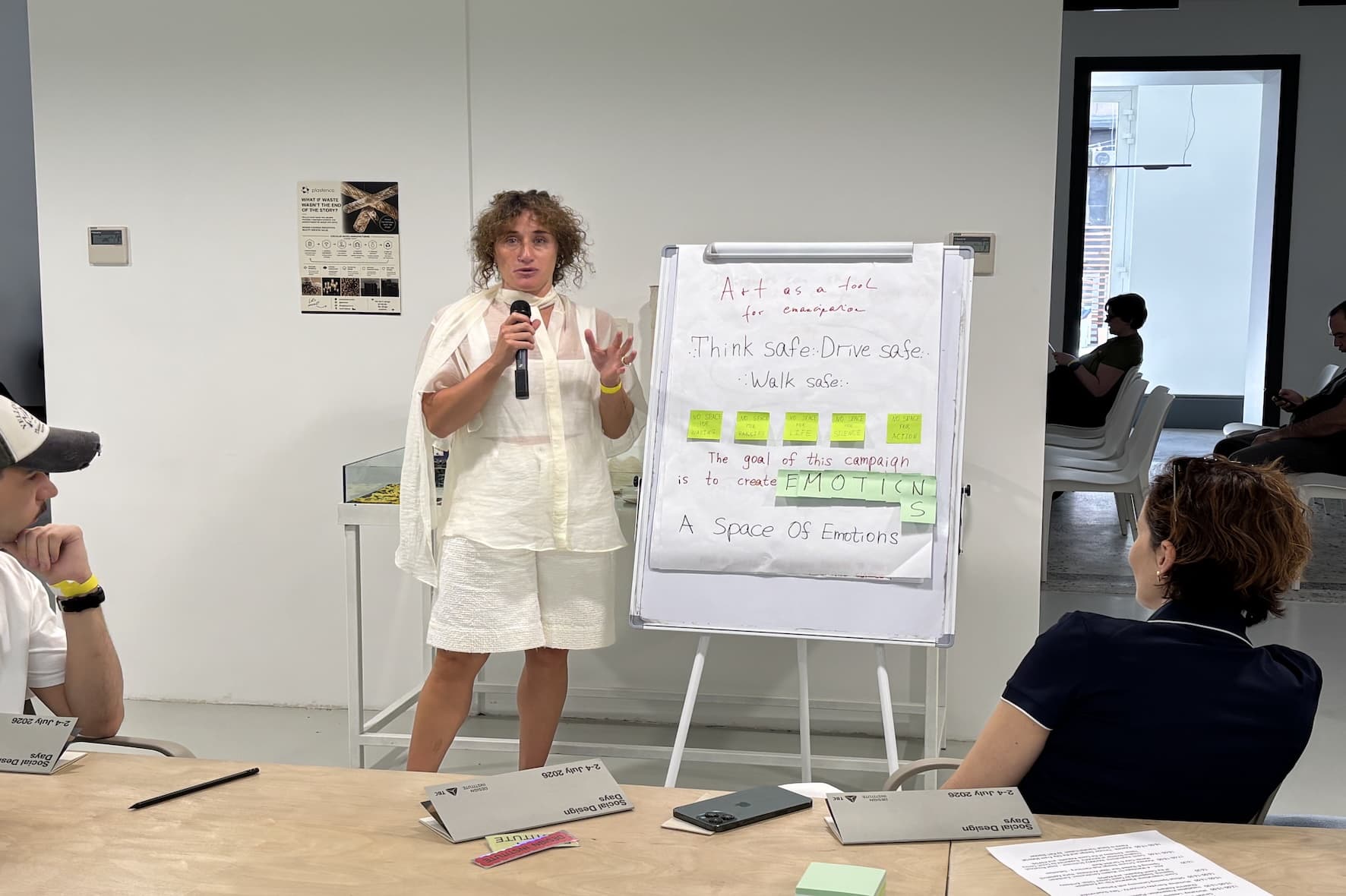
The second group formulated a critical urban intervention campaign, examining how physical space and public sentiment can be reclaimed under the guiding theme: „Art as a tool for emancipation.“
- The Baseline Diagnosis ("Think safe : Drive safe : Walk safe"): Using this restrictive regulatory mantra as a starting point, the group diagnosed how contemporary public spaces constrain human interaction. They mapped systemic urban and mental alienation through five distinct critical barriers:
- NO SPACE FOR WAVING (Loss of spontaneous, non-verbal connection)
- NO SPACE FOR PARKING (Loss of public lingering and quality time)
- NO SPACE FOR LIFE (Subjugation of living environments to infrastructure)
- NO SPACE FOR SILENCE (Overexposure to noise and commercial stimuli)
- NO SPACE FOR ACTION (Deprivation of individual agency in the public realm)
The Campaign Goal was the reversing of these blockages by deliberately injecting emotional resonance back into our highly functionalist cities. Through a playful layout of green sticky notes forming the word "EMOTIONS", the team conceptualized a strategy to transform alienated transit zones into interactive, emancipated community hubs: "A Space of Emotions".
Photos:
1-4, 6-8 Design Institute
5, 9-10 Karl Stocker
Thanks to:
Christina Hedin & Sophie Kauper
Publication:
Lessons on Change. 15 Creative Minds Share Their Stories. Christina Hedin / Sophie Kauper / Karl Stocker (eds.), Birkhauser 2025.